
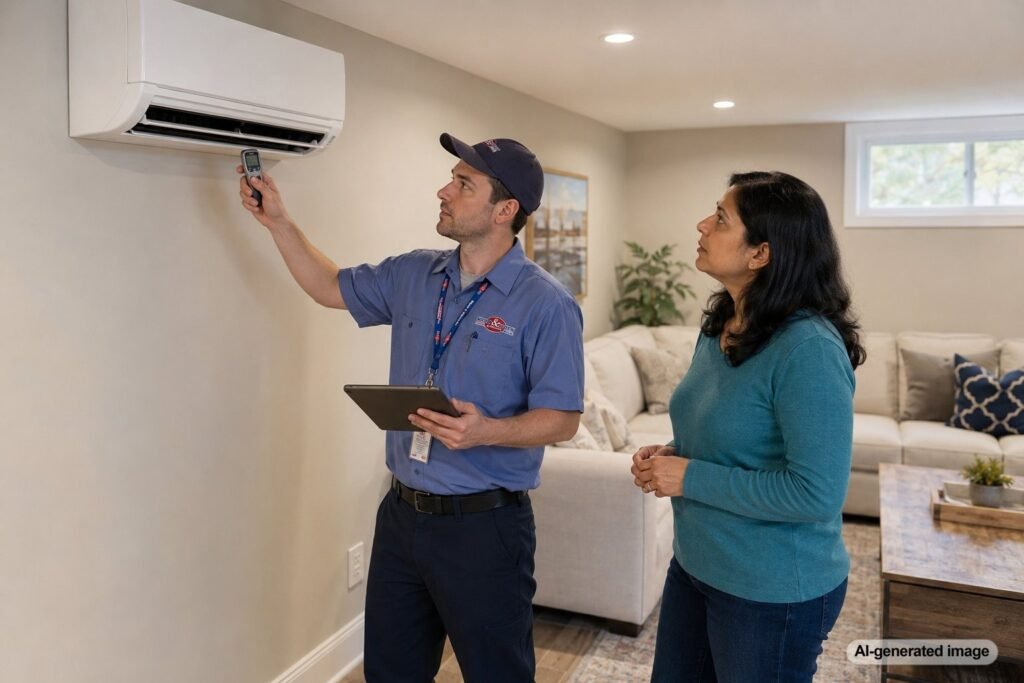

Some rooms seem to have a mind of their own when it comes to temperature. One bedroom may feel comfortable while another stays noticeably warmer, and a converted garage or home office can become difficult to cool during the hottest part of the year. For homeowners considering ductless mini splits for Tampa homes, this type of system can offer a practical way to improve comfort in spaces where traditional central air does not always deliver consistent results.
Ductless air conditioning is designed to cool individual areas without relying on an extensive network of air ducts. That makes it particularly useful for rooms that have different cooling needs from the rest of the house. But can a ductless system actually solve those persistent hot spots? In many situations, the answer is yes.
Why Are Some Rooms Harder to Cool?
Before choosing an air conditioning solution, it helps to understand why certain rooms struggle to maintain a comfortable temperature.
One common reason is the location of the room. Spaces on the upper floor, for example, often receive more heat from the sun and can become warmer than rooms downstairs. Rooms with large windows may also absorb significant amounts of solar heat throughout the day.
Insulation can play a role as well. If a room has older or insufficient insulation, cooled air may escape more easily. The same problem can occur around windows and doors if there are gaps that allow warm outdoor air to enter.
Another factor is the design of the home’s existing HVAC system. Central air conditioning is generally designed to cool the entire house, but that does not always mean every room receives the same amount of conditioned air. Differences in ductwork, room size, airflow, and thermostat location can create noticeable temperature variations.
How Ductless AC Works
A ductless mini-split system typically consists of an outdoor compressor or condenser and one or more indoor air-handling units. Instead of sending conditioned air through ducts, the indoor unit delivers cooled air directly into the room.
This setup gives homeowners greater control over individual spaces.
For example, if a home office becomes warmer than the rest of the house during the afternoon, an indoor unit can be installed in that area to provide dedicated cooling. A bedroom that feels too warm at night can also have its own temperature setting.
Because the system does not depend on existing ductwork, it can be a useful option for additions, remodeled spaces, garages, workshops, and rooms where extending traditional ductwork would be difficult.
Better Temperature Control for Individual Rooms
One of the biggest advantages of ductless cooling is the ability to treat rooms according to their specific needs.
With a conventional central AC system, the thermostat typically measures the temperature in one main location. That temperature may not accurately represent conditions in every room. A bedroom at the far end of the house could be several degrees warmer even though the thermostat indicates that the desired temperature has already been reached.
Ductless systems can address this issue by providing independent control. Depending on the system configuration, different indoor units can be adjusted separately.
This can be especially useful for households where family members prefer different temperatures. Rather than trying to find one setting that keeps everyone comfortable, individual rooms can be managed according to their occupants and usage.
A Practical Option for Additions and Converted Spaces
Hard-to-cool rooms are not always part of the original home design.
A homeowner may add a sunroom, finish a garage, create a home office, or convert an attic into a living area. Extending an existing duct system into these spaces can sometimes require significant changes to the home’s HVAC layout.
Ductless AC offers another approach.
Since the indoor unit connects to an outdoor unit through a small conduit, installation does not require traditional supply and return ducts throughout the space. This can make ductless systems particularly appealing when adding cooling to an area that was not included in the original HVAC plan.
However, the right system still needs to be properly sized for the room. A unit that is too small may struggle to maintain the desired temperature, while an oversized system may cycle too frequently and fail to provide consistent humidity control.
Can Ductless AC Help With Tampa’s Climate?
In a hot, humid climate, indoor comfort involves more than simply lowering the temperature.
Humidity can make a room feel warmer and less comfortable, even when the thermostat displays a relatively moderate temperature. Air conditioning systems help manage indoor humidity as part of the cooling process, although the results depend on factors such as system size, operating conditions, insulation, and the condition of the building envelope.
For Tampa-area homeowners, consistent cooling can become particularly important during periods of high outdoor temperatures. A room that already receives significant sunlight or has limited airflow may feel uncomfortable even when the home’s central AC is operating normally.
A properly selected and installed ductless system can provide targeted cooling where it is needed most.
What to Consider Before Installing One
Ductless AC is not automatically the right solution for every uncomfortable room. Before installation, it is worth identifying the reason the space is difficult to cool.
If the problem is caused by poor insulation, air leaks, blocked vents, or an HVAC system that needs maintenance, addressing those issues may improve comfort without adding another cooling system.
A professional assessment can help determine whether the problem is related to equipment performance, airflow, building conditions, or the room itself.
If ductless cooling is appropriate, factors such as room size, insulation, window exposure, ceiling height, occupancy, and local climate should be considered when selecting equipment.
A More Flexible Approach to Home Comfort
A room that never seems to reach a comfortable temperature can be frustrating, especially when the rest of the house feels fine. Ductless AC provides a flexible way to address these uneven cooling conditions by delivering air conditioning directly where it is needed.
Its independent temperature control, lack of traditional ductwork, and suitability for individual rooms make it worth considering for certain homes and spaces.
Still, the best solution depends on why the room is uncomfortable in the first place. By identifying the underlying problem and choosing equipment based on the actual cooling requirements of the space, homeowners can create a more balanced indoor environment without automatically changing the entire HVAC system.
For rooms that consistently stand apart from the rest of the house, targeted cooling may be the missing piece in creating a more comfortable home.
Conclusion
Hard-to-cool rooms can make it difficult to maintain consistent comfort throughout a home, particularly during periods of intense heat and humidity. A properly sized and installed ductless AC system can provide targeted cooling, independent temperature control, and greater flexibility for spaces that traditional central air conditioning may struggle to cool evenly. Whether the issue involves a warm upstairs bedroom, a sun-filled home office, a remodeled area, or an addition without existing ductwork, a mini-split system may offer an effective way to improve room-by-room comfort.
However, it is important to identify the underlying cause of uneven temperatures before investing in new equipment. With professional evaluation, proper sizing, and suitable installation, ductless air conditioning can be a valuable option for creating a more comfortable and consistently cooled home.